
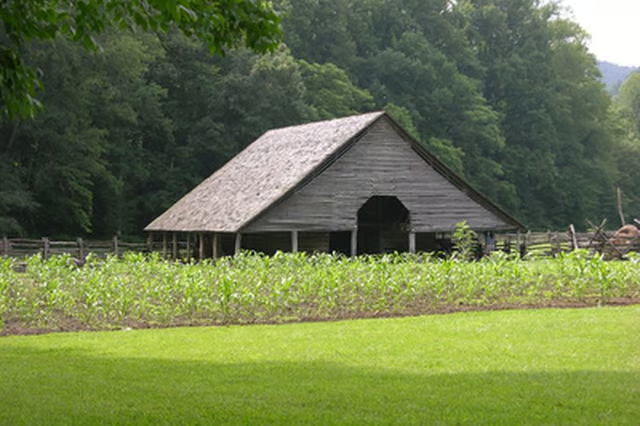


History
According to the Oregon State Archives, the Homestead Act of 1862 offered settlers “160 acres of land in the public domain if they built a home on the land, resided there for five years, and cultivated the land.” These federal land grants encouraged and facilitated the settlement and development of Oregon.
Misconceptions
Contrary to some claims propagated on the Internet, Oregon’s public land can no longer be obtained for free or at giveaway prices. The Federal Land Policy and Management Act of 1976 abolished homesteading (in its original sense) by retaining “public lands in Federal ownership” and giving sole responsibility for the management and sale of public land to the Bureau of Land Management.
Significance
Oregon’s diverse, resource-rich landscape, reaching from the fertile Willamette Valley to eastern Oregon’s high desert region, attracts both novice and serious homesteaders. In the broader sense, homesteading exists in varying degrees throughout Oregon’s vast rural spaces. Organic food production and specialization in “green” products facilitate self-sustaining or profitable homesteads, as products derived from strictly renewable energy sources carry increasing consumer appeal.