
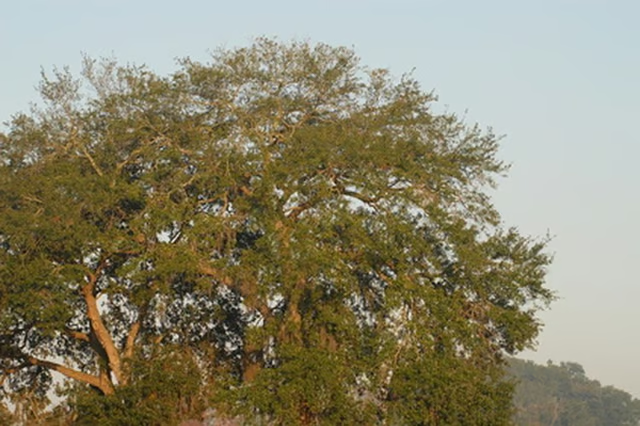


Bringing the pests under control can not only boost the health of your tree, but also improve its appearance. While most caterpillars are not a serious threat to a live oak, many of them create unsightly webs and cocoons that can detract from the enjoyment of your landscape.
Things You Will Need
-
Examine your tree for sap spots, caterpillars, moths or bore holes in the wood. Also look for eggs laid on the underside of leaves on low branches. These are all signs of oak worm infestation.
-
Secure a sample of a caterpillar for examination, and place it on a piece of white cardboard for best contrast. Use a magnifying glass to examine the caterpillar. Make a note of the coloration of the pest and all its distinctive features.
-
Match your findings to the following descriptions: If the caterpillar is milky white to pale green with a head that is either brown or black, it is most likely the looper, or oak leaf roller. If your specimen is charcoal in color with yellow-orange stripes, it may be the orange-striped oakworm. If your sample is greenish white with a dark brown head, a hairy body and hooked legs, it may be a carpenter worm.
The Drip Cap
- Live oaks are hardy trees, capable of surviving most pests and blights.
- While most caterpillars are not a serious threat to a live oak, many of them create unsightly webs and cocoons that can detract from the enjoyment of your landscape.
- Match your findings to the following descriptions: If the caterpillar is milky white to pale green with a head that is either brown or black, it is most likely the looper, or oak leaf roller.