


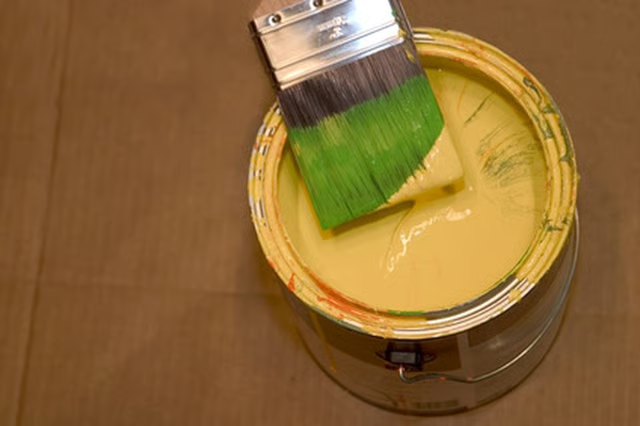
On the rare occasion that a solvent-based coating requires thinning, such as when the first coating of floor enamel or of rustproofing paint applied to a wood surface requires a thinned application for improved penetration, a solvent-based paint thinner does the job. Water-based paints, including aqueous acrylics, require a water-based thinner. All three thinners may themselves be diluted, but each requires its own dilution medium.
Things You Will Need
-
Determine the type of the paint thinner you intend to dilute. The thinner may be mineral oil-based, petroleum- or aqueous-based acrylic or water-based. Read the label or contact your paint store to be certain.
-
Dilute a small amount of thinner in a glass flask and stir with the glass rod. Dilute water-based and aqueous acrylic-based paint thinners with distilled water. For mineral oil-based paint thinners use vegetable oil or walnut oil. Petroleum-based paint thinners require isopropyl alcohol to dilute the product.
-
Test your diluted thinner with a sample of the paint it will be used to thin. Note the thinning and drying characteristics of your formulation before mixing and applying it on a large scale. Adjust your formulation as required, retest and mix a larger batch of diluted thinner as needed.
The Drip Cap
- Paint thinners differ according to the paint formulation being thinned.
- Oil-based paints are not water soluble and therefore require a mineral oil-based thinner.
- Dilute a small amount of thinner in a glass flask and stir with the glass rod.
- Test your diluted thinner with a sample of the paint it will be used to thin.