


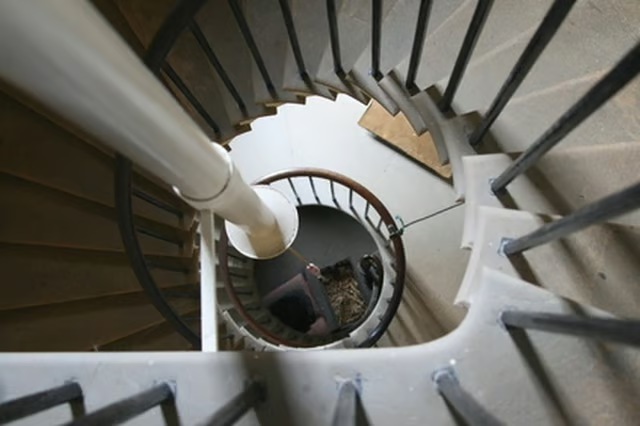
However, this figure can indeed be calculated with just a few variables, such as the radius of the staircase and the height to the next floor.
-
Measure the radius of the spiral staircase using your tape measure. This is the distance from the center of the center support pole to the outside edge of the staircase.
-
Measure the height of the staircase using the same units as you used for the radius. This should be the distance from the floor of one level to the floor of the next level. You can also measure the vertical distance from the bottom of the handrail to the top of the handrail. However, since the handrail height should be uniform, this results in the same measurement, although more difficult to measure.
-
Use the formula:
-
Handrail Length = square root[(Height^2 + (2 * pi * Radius)^2)]
-
In this equation, "pi" is a constant of 3.14, and the notation "^2" means to square the preceding number or calculation. This calculation also assumes one full rotation of the staircase, which is common.
The Drip Cap
- Spiral staircases can offer beautifully artistic access to the second level of your home with minimum space requirements.
- When designing a spiral staircase, it can be difficult to determine the length of the handrail required, since it follows a helical spiral up the staircase.
- Measure the radius of the spiral staircase using your tape measure.