



One solution is to employ brooms, mops and mop buckets that are ergonomically designed to minimize back strain.
Things You Will Need
-
Keep your back straight while sweeping your floor with a standard bristle broom. Focus your attention on moving the broom with your arms -- don’t bend or twist your back. Collect your sweepings with a long-handled dust pan so you don’t have to bend over as much. After you've finished your sweeping, use a microfiber dust mop to pick up any smaller, leftover dust particles.
-
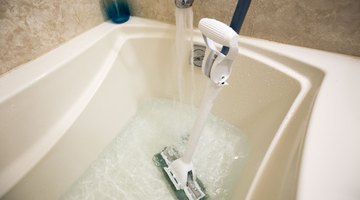
Fill your mop bucket only half full, or less, so it is not as heavy. Alternatively, you can just fill up a sink or partly fill a bathtub with your mop water so you won't have to lift a bucket at all.
-
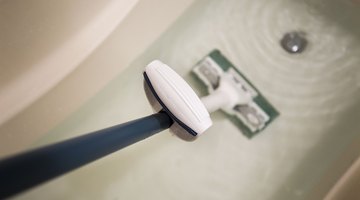
Use a sponge mop -- preferably one that has a lever or button on the handle -- to wring the mop head. Sponge mops are much lighter than string mops and easier to wring out.
-
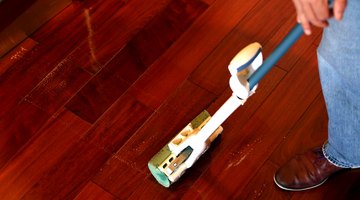
Mop only small sections of the floor at a time. Maintain an erect posture, just as you did in sweeping, without bending or twisting your back. Mopping smaller sections -- three- to four-square-foot sections at a time -- limits body movement. Step over to the next section when you are ready to move on, rather than leaning over.
-
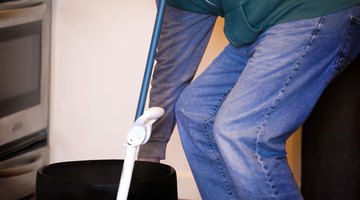
Bend at the knees to lift the mop bucket when it is time to empty it. Do not bend at the waist to lift it.

The Drip Cap
- If you hurry through your routine cleaning chores without paying attention to proper posture, you may feel back pain later in the day.
- Collect your sweepings with a long-handled dust pan so you don’t have to bend over as much.
- After you've finished your sweeping, use a microfiber dust mop to pick up any smaller, leftover dust particles.
- Use a sponge mop -- preferably one that has a lever or button on the handle -- to wring the mop head.