


Despite all this, however, sodium hydroxide is not a compound you want to put on your plants.
Alkalinity
Sodium hydroxide is strongly basic. When it dissolves in water, it releases hydroxide ions, which act as base because they can pick up hydrogen ions to become H2O. As sodium hydroxide concentration increases, the hydrogen ion concentration decreases, and the pH of the solution increases. Drain cleaners and oven cleaners or concentrated lye sold at some hardware stores will typically have a pH from 13 to 14 -- a highly alkaline pH.
Soil
A strong solution of lye will do one of two things, depending on how it's applied. If you were to pour it on the soil, for instance, it would raise soil pH. The extent to which the soil pH changes will depend on the buffer capacity and the amount and concentration of lye applied. If soil pH did increase substantially, however, many nutrients the plant needs would become unavailable to it -- iron being just one example. Starving the plant of nutrients could kill it and at the very least would stunt its growth.
Direct Application
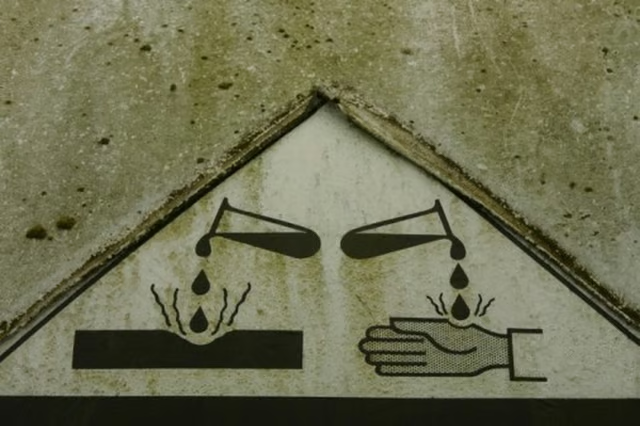
If the sodium hydroxide were directly applied, by contrast, it would harm the plant in a much more immediate way. Concentrated sodium hydroxide is a very caustic chemical and can cause serious tissue burns in humans; if you splashed it in your eyes by accident, it could cause permanent blindness. When it's applied to plants, the sodium hydroxide could damage their tissues and more than likely kill them as well. The excess of hydroxide ions can participate in reactions like the breakup of lipids that cause serious harm to living tissue.
Neutralization
A solution of sodium hydroxide is dangerous because of its high pH -- in other words, the high concentration of hydroxide ions. If the solution is brought to neutral pH by titrating it with acid, the hydroxide ions from the sodium hydroxide will be neutralized by hydrogen ions from the acid, and the solution will cease to be dangerous to plants. Sodium hydroxide could therefore be used to neutralize an acid or increase the pH of an acidic solution, but applying it directly to your plants or soil is not a good idea.
The Drip Cap
- Sodium hydroxide or lye is a simple ionic compound with the chemical formula NaOH, meaning that it has one atom of sodium for each atom of oxygen and atom of hydrogen.
- Sodium hydroxide is strongly basic.
- Drain cleaners and oven cleaners or concentrated lye sold at some hardware stores will typically have a pH from 13 to 14 -- a highly alkaline pH.
- A strong solution of lye will do one of two things, depending on how it's applied.
- If you were to pour it on the soil, for instance, it would raise soil pH.
- The extent to which the soil pH changes will depend on the buffer capacity and the amount and concentration of lye applied.