-
Locate both the septic tank and leach field. Also, locate the reserve or backup drainage area. Inspect the property plot map to identify the specific areas. For those with older homes, with no plot map, call a septic specialist. They can identify these boundaries for you.
-
Mark the perimeters of the septic area with cones or brightly colored tape. Tread lightly: no deep digging or construction. Do not build any permanent structures. Do not pour concrete or install any impervious hardscape.
-
Pull out any weeds growing in the area. Make sure all of the roots have been removed. Gently rake the area and even out the soil. Remove small rocks and twigs. Scatter seeds by hand or use a seed dispenser to distribute evenly.
-
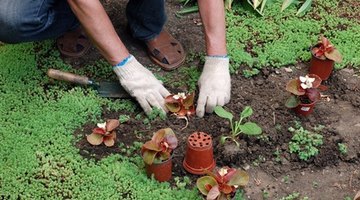
Dig holes for small plants and shrubs around the perimeter of the septic area. Use a hand spade to minimize site disturbance. Remove plants from containers. Place them in the holes and back-fill with the removed soil.
-
Maintain your site. Water only as needed. Fertilize occasionally with organic products. Mulch around shrubs to minimize watering. Place small birdbaths, or ornamental statues over septic tank covers to disguise their location.