
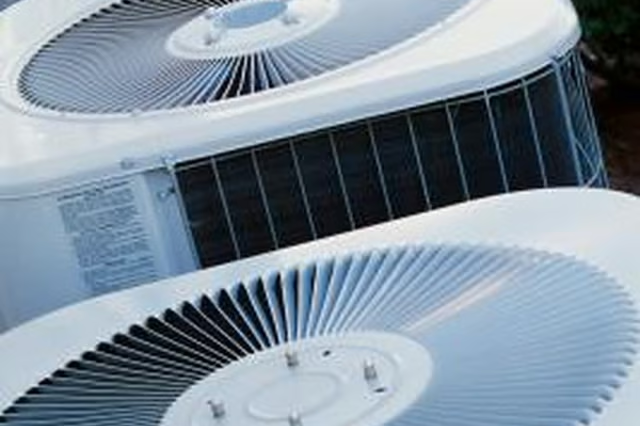
How An Air Conditioner Works
In effect, an air conditioner doesn't cool the air inside a given space as much as it sucks the warm air and vents it out of the conditioning unit. Air conditioners come in various sizes and styles to fit a consumer's need. Central air units combine the use of an outdoor compressor with an air handler to produce cool air in a given space. Portable window or floor models can be installed for smaller spaces where central air is not available. All of these different types of units work the same way, removing warm and humid air from a space and providing cooler air.
What is a BTU?
A BTU or British Thermal Unit is the measure by which heat energy is calculated. One BTU equals the amount of energy it takes to heat 16 oz. water 1 degree F. In terms of air conditioning units, a BTU rating refers to the amount of heat energy being removed from a given space per hour.
5,000 BTU Air Conditioner
A 5,000 BTU air conditioner is rated for no more than 250 square feet and draws between 10 and 13 amps. Because most household circuits -- such as living areas and bedrooms -- don't require more than 15 amps per circuit or room, a 5,000 BTU air conditioner is perfect for bedrooms and smaller living areas .
8,000 BTU Air Conditioner
An 8,000 BTU air conditioner is rated to cool up to 350 square feet and can spike to over 15 amps, so a 20-amp circuit breaker might be needed for the particular circuit. An 8,000 BTU air conditioner is better suited for larger, open living spaces rather than bedrooms, or for rooms with higher vault-type ceilings that can trap heat and cause a smaller AC unit to work harder.
The Importance of Understanding BTUs in Relation to Square Footage
A cooling unit only performs as well as it's treated. Using a smaller BTU output air conditioner in a space it isn't suited for makes it work harder, draws more energy, and ultimately doesn't cool that area effectively. Using a larger BTU air conditioner in a smaller space than it's suited for might cool a space too well, and in turn waste energy. Having an understanding of the appropriate BTU usage for a given space can save money on an air-conditioning unit and your energy bills.