

How to Build an Outdoor Toilet
An outdoor toilet can be handy for servicing outbuildings on your property that are far from the main house, and it can also be a lifesaver in the event of a water emergency. A simple outhouse consists of a hole in the ground covered by basic wooden structure to provide privacy and shelter for the user.
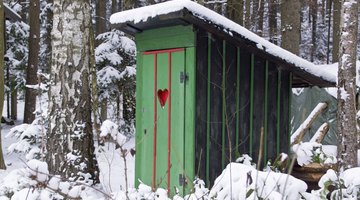
It isn't the only type of outdoor toilet, but it's the easiest to build, and it's movable.
Placing the Privy
The main working part of an outhouse is a pit to hold waste, and before you dig one, you need to consider its placement. The waste will leach into the ground, and should therefore be at least 200 feet away from all ground water, including springs, streams, underground aquifers and ponds, as well as the source of your drinking water. The spot you choose should be free of tree roots and on higher ground, if possible, to reduce the chance of flooding. It should also be downwind of the parts of your property that people frequent regularly.
Digging the Pit
The pit for an outhouse can be square or round. It should be two feet smaller on all sides than the structure that covers it to prevent it from caving in or the structure from falling inside if it inadvertently shifts. You can dig the pit with a shovel, and as a rule of thumb, you should make its depth equal to about half of your height. For an outhouse placement that is less than ideal, you may want to limit soil dispersion by lining the hole with a plastic 55-gallon drum. If you do this, it's a good idea to compost the waste rather than leave it untreated.
The Shed-Like Structure
Framing a structure around an outhouse pit is similar to building a shed. It doesn't need to be much larger than 6 by 6 feet, and setting it on pier blocks makes it easy to move if it turns out to be popular. The siding can be T1-11 or another type of plywood, and the roof shingled, metal or even corrugated plastic. The structure needs a floor, and the pedestal should rest on the floor and cover the pit. The opening needs to be oblong, about the same size as a toilet opening and close to the front of the pedestal. Cover it with a regular toilet seat.
Venting and Composting
The gases released from the pit contain methane, and they are flammable and dangerous. The structure needs to include a 2- or 3-inch vent pipe that extends from inside the pit to a point 6 inches or more above the roof to dissipate them. Cover the vent with a cap to keep debris and rainwater out of the pit. The waste composts more readily if pour sawdust in after every use. If your pit has a barrel liner, you can refresh the toilet by pulling out the barrel and replacing it with an empty one. Cover the barrel -- but provide one or two air holes -- and agitate it regularly, adding sawdust as needed, until the contents have composted enough to use in your flower garden.
References
Writer Bio
Chris Deziel has a bachelor's degree in physics and a master's degree in humanities. Besides having an abiding interest in popular science, Deziel has been active in the building and home design trades since 1975. As a landscape builder, he helped establish two gardening companies.
Photo Credits
- kelifamily/iStock/Getty Images
- kelifamily/iStock/Getty Images
More Articles

