


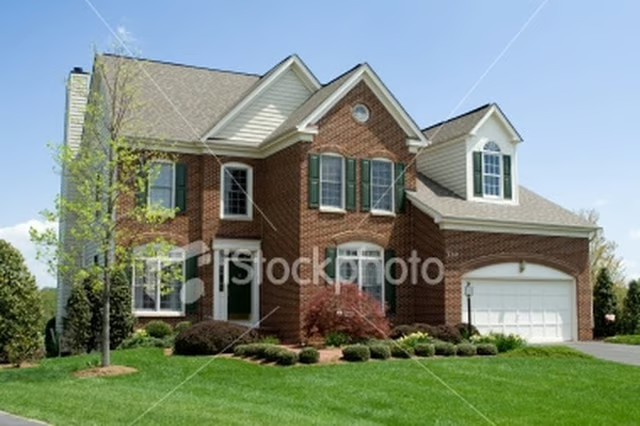
Exterior veneers usually cover the front of a structure or are seen in only one or two sections for architectural interest. People who select exterior brick veneer later opt to remove it as a quick way to alter their home's appearance. Depending on the amount of exterior brick you want to remove, this project can be completed in about one day.
Things You Will Need
-
Cover your eyes and hands with protective gear (goggles and gloves) before you begin. Locate the center of one of the upper rows of brick veneer that you wish to remove. Place the tip of the chisel on the brick at this center point, keeping the hand that holds the chisel in the center of the tool, away from the brick's surface.
-
Use a large mallet or hammer (with a wide striking surface) to strike the head of the chisel sharply, using only as much force as is required to crack apart the brick and the surrounding mortar.
-
Repeat until all of the brick veneer that you wish to remove has fallen away. Use the wire brush to abrade the surfaces exposed by the removal of the brick and mortar. Vacuum any residual brick dust and mortar fragments.
-
Rinse the newly exposed area with plain water, until the surface is as free of loose grit as possible. Use a hose or a large spray bottle filled with water.
-
Allow the area to dry completely before applying any new surfacing material.
The Drip Cap
- Exterior brick, also called "facing" or "veneer" is a layer of thin bricks or flat, simulated bricks used as decor on homes or buildings.
- People who select exterior brick veneer later opt to remove it as a quick way to alter their home's appearance.
- Use a large mallet or hammer (with a wide striking surface) to strike the head of the chisel sharply, using only as much force as is required to crack apart the brick and the surrounding mortar.
- Vacuum any residual brick dust and mortar fragments.