


Permits for Propane Tanks

Most propane tanks are 500 or 1000 gallons in size for residential use. All tanks, greater than 500 gallons, must be registered and meet requirements of the State Water Control Board. Permits must be obtained for above and below ground propane tanks. When a home is built, the company installing the septic system often digs the hole for an underground storage tank. Cooperation is necessary to insure the septic system will be placed where it's not driven over or damaged by propane delivery tanks.
Propane Tank Installation

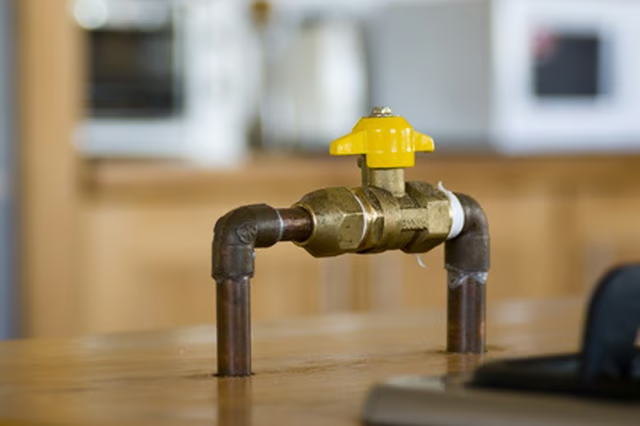
The tank installer places it the required distance from the structure and installation is completed, following regulations. The propane gas line runs from the tank to a gas line stub outside the house. This gas connection pipe extends out through a basement wall a maximum of 2 inches with a minimum height of 18 inches above grade. This connection pipe must be threaded. Copper line cannot be used as a main gas connection line through a concrete wall. The gas connection can't be within 3 feet of a venting window, door or within 5 feet of an ignition source.
Propane Tank Gauge
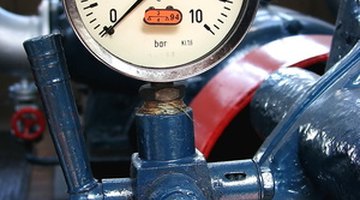
Most tanks have a gauge located under the lid to show the amount of fuel it contains. Tanks are filled to 80 percent of capacity to allow expansion of the liquid gas. The propane tank sits on a concrete pad, and the line is placed in a trench dug according to code. A required pressure test is completed by the installer to ensure pressure meets the requirements and that there are no leaks.
Installing Gas Appliances and Equipment
Propane or gas appliances must be installed by a service representative. Required clearance distances between a gas appliance and combustible walls represent minimum requirements for safe operation. This is particularly important when installing a gas fireplace. Permits and inspection are required for all vented gas space heating units, including combo-heaters, which are a combination water and space heater. Shut-off valves must be placed at every appliance hookup.
Venting Pipes

Vents must be properly sized for the appliance, made of approved materials and secured according to code. Duct tape or foil tape shouldn't be used to seal up vent pipes that come apart. Deteriorating vent pipes should be replaced. Care must be taken when installing vents through a wall or ceiling to avoid danger from combustible materials. Fire-stop spacers must be used that ensure a hot vent will not shift and touch a wooden joist or combustible material used in the building's construction.