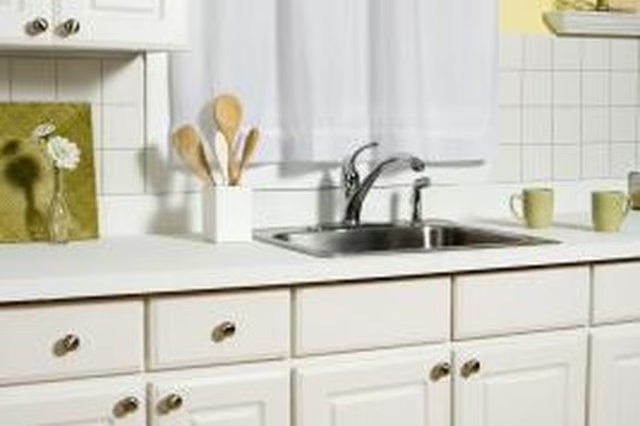
How to Fill Gaps Between IKEA Cabinets

How to Cover Old Impressions on Cabinets With New Hardware
Written By
Nat Fondell
Nat Fondell
Published: Oct 15, 2011
Updated: Nov 20, 2021
2 minute read

Gaps Less Than 1/4 Inch

Step 1

Drill evenly space holes through the interior of the cabinets on either side of the gap, roughly 6 inches apart, 2 inches from the front of the cabinets. Use a drill bit with a smaller diameter than the 3/4-inch wood screws.

Step 2

Slide a washer over each wood screw, and drill wood screws into each of the predrilled holes. Begin at one end of the cabinet and work your way to the other. Tighten the screws completely until the gap decreases and the screw is at surface level inside the cabinet.

Advertisement

Step 3

Re-tighten the previously installed screws once the final screw is in place. Add additional screws if necessary to further decrease the gap between the cabinets.

Gaps Wider Than 1/4 Inch

Step 1

Measure the vertical distance the trim board must cover, and mark that distance on the trim board. Cut the trim board to fit with the saw.

Step 2

Measure the horizontal distance the trim board must cover from the storage side of each cabinet edge. Transfer the distance to the trim board, and cut the trim board with the saw or utility knife so its horizontal size matches the necessary coverage.

Step 3

Position the trim board in its intended location, and fasten it in place by hammering in finishing nails every 6 inches along both cabinet sides.

Step 4

Paint the trim board, paying particular attention to the nail heads, so that it matches the color of the original cabinetry.

Tips

Match trim board to natural wood cabinets by selecting trim board that already matches the cabinets. This trim can be purchased from IKEA in many of its cabinet-style wood finishes.

If the gap is large, the cabinets can be adjusted in position on their suspension rails by loosening the screws at the back of the cabinet and moving the cabinets toward each other slightly.

Warnings

Never attempt to screw together cabinets with a gap larger than 1/4 inch, as this may cause undue stress on the adjoining cabinetry and compromise the integrity of the suspension rails.

Photo Credits

Jupiterimages/Comstock/Getty Images

Nat Fondell

Nat Fondell has been writing professionally since 2006. A former editor of the "North Park University Press," his work has appeared at scientific conferences and online, covering health, business and home repair. Fondell holds dual…

Sponsored
HomeSteady Logo

HomeSteady is the ultimate guide for all your household needs, from cleaning and HVAC to electrical, DIY and maintenance.

Property of TechnologyAdvice. © 2026 TechnologyAdvice. All Rights Reserved

Advertiser Disclosure: Some of the products that appear on this site are from companies from which TechnologyAdvice receives compensation. This compensation may impact how and where products appear on this site including, for example, the order in which they appear. TechnologyAdvice does not include all companies or all types of products available in the marketplace.