-
Gather information about the hot water recirculation system. Calculate the length of pipe used for the return line from the farthest fixture to the water heater. Note the type and size of the return line piping. Write down the type and size of the water heater tank.
-
Determine the hot water needs of the household. For most residential systems, the simple charts provided by manufacturers are sufficient. Based on water heater size and number of bathrooms, the charts usually recommend several pump models.
The manufacturers also provide charts showing the hot water demand of appliances and activities. These can be used to determine the hot water needs of unique households with multiple appliances, but are usually not needed. Consult with a qualified designer for multiple family dwellings that require several zones.
-
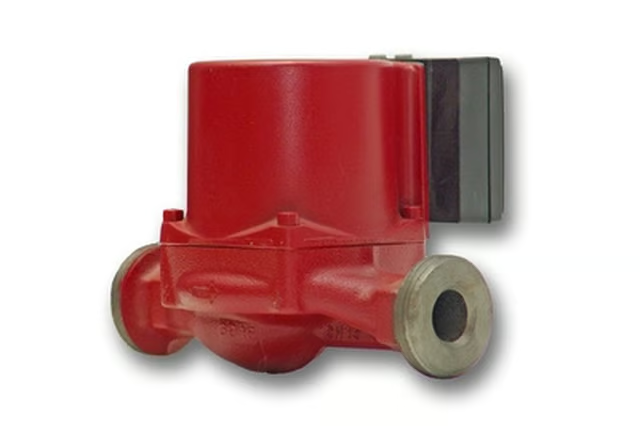
Select the pump size using the charts provided by the manufacturers. Do not oversize the pump. Larger pumps will force too much water through the pipes, causing damage as the velocity of the water erodes the inside of the pipe. For most residential systems, this is only a concern with half-inch or smaller pipe.
Avoid the use of cast iron or steel body pumps, as hot water systems will quickly corrode these materials. Select a pump designed specifically for hot water recirculation made of non-corrosive materials, such as stainless steel or bronze.
-
Select the type of pump operation. Hot water recirculating pumps are provided in three basic configurations. Timer-operated pumps can be set to run when hot water is normally required, such as before leaving for work and in the evening. Aquastat-operated pumps activate when the temperature of the water in the return line cools. Many pumps combine timer and aquastat controls. Continuous-run pumps are usually used for larger systems with constant demand for hot water.
The recirculating pump does not interfere with normal water flow. If there is hot water demand when the pump is off, water flows through the system normally.