
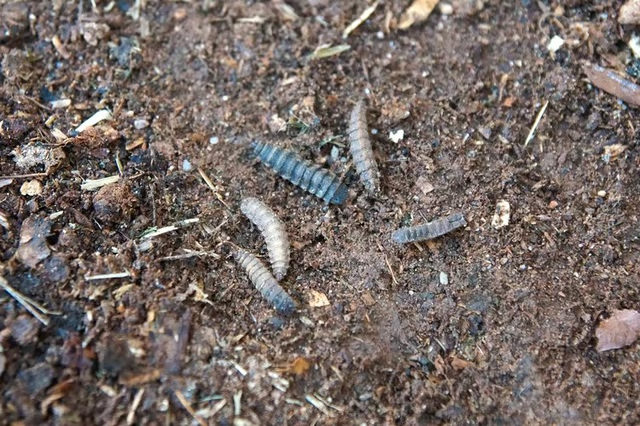


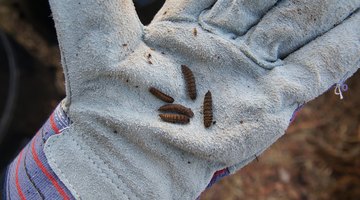
Although beneficial to the composting process, soldier flies can lay eggs in the compost, producing maggots--also called larvae--which have the singular ability to disgust even the most enthusiastic composters. Grayish-white in appearance, soldier fly maggots are approximately an inch long and wriggle actively, especially when exposed to light. Since these maggots thrive on nitrogen-rich materials, one of the keys to eliminating them from your compost is maintaining a proper balance of carbon materials in the bin.
Things You Will Need
-
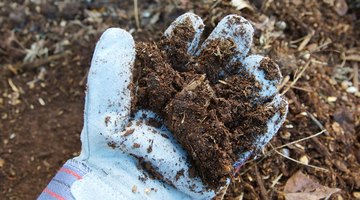
Check the moisture level of the compost bin. The aim for compost bin is for it to be the consistency of a wrung-out sponge. If the compost is dripping wet it’s too moist.
-
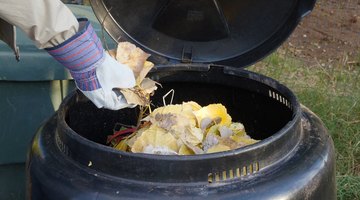
Add carbon-rich materials such as shredded newspaper, cardboard, dead leaves, straw or old hay, to the compost bin to reduce the moisture level and to offset the amount of nitrogen materials.
-
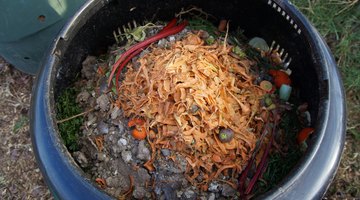
Cover the nitrogen materials in your compost with at least 2 to 4 inches of carbon materials. Bury food scraps and other nitrogen-rich materials thoroughly in the bin.
-
Feed maggots in the compost bin to the birds to help control them. Dump the larvae in a location that is away from buildings so birds can easily find them.
The Drip Cap
- In addition to the millions of microscopic bacteria that decompose the organic waste in a compost bin, a variety of larger creatures helps produce the finished product, including soldier flies.
- Although beneficial to the composting process, soldier flies can lay eggs in the compost, producing maggots--also called larvae--which have the singular ability to disgust even the most enthusiastic composters.
- Add carbon-rich materials such as shredded newspaper, cardboard, dead leaves, straw or old hay, to the compost bin to reduce the moisture level and to offset the amount of nitrogen materials.