
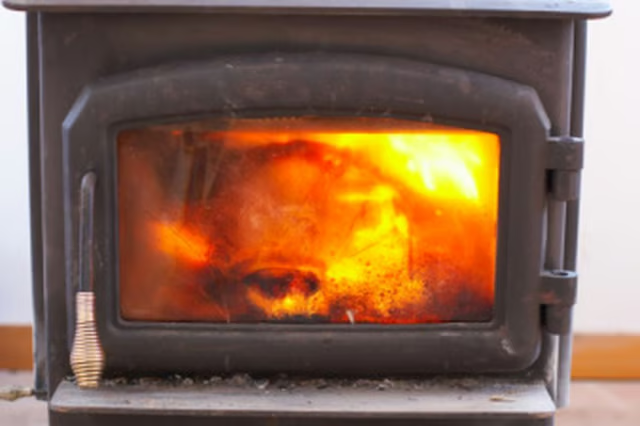


Make sure you install your stove pipe and chimney correctly to reduce the risk of fire.
Chimney Versus Stovepipe
Never pass stove pipe through a wall, ceiling or roof. Only properly insulated wood stove chimney is considered safe for these purposes. Stove pipe works only for the interior part of the wood stove exhaust system. Double or triple-walled chimneys, called high temperature chimney, is the most popular option for new installations, according to Hearth.com. The extra insulative power of these chimneys helps keep heat from escaping the house and reduces the risk of fire more than a lower temperature chimney. Avoid extending chimney height with stovepipe, even well above the roof, as this can encourage creosote formation and increase the risk of chimney fires.
Height
Taller chimneys work better. They carry smoke farther away from the house than short chimneys, and reduce the chance of a spark landing on the roof surface. Building codes require chimneys to be at least 2 feet taller than any object within 10 feet, such as the roof surface or a dormer, or 3 feet taller than the peak of the roof. In some cases, this height may not be adequate to allow the chimney to draw air properly. In homes surrounded by trees or hills, or close to large bodies of water, extend the chimney height to improve stove efficiency.
Masonry Chimney Installations
Some older wood stove installations use an existing masonry chimney to house the pipe. This technique does reduce the risk of fire, and can ensure the chimney rises far enough above the roof peak to prevent problems. However, it is no longer considered safe or effective. Wood stoves connected to existing masonry chimneys tend to draft poorly and build up large quantities of creosote, creating a fire risk. Modern masonry chimney installations require special installation kits lined with stainless steel pipe and sealed against drafts to work correctly.
Pipe Placement
The connector pipe from the stove to the chimney can greatly affect how well the stove burns and how well the chimney works. The Michigan State University Extension recommends keeping connector pipes as short as possible. No connector pipe should be longer than 75 percent of the chimney height above the flue inlet, or 10 feet. Use as few bends as possible, since each one increases the risk of soot collecting in the pipe and decreases chimney efficiency.