


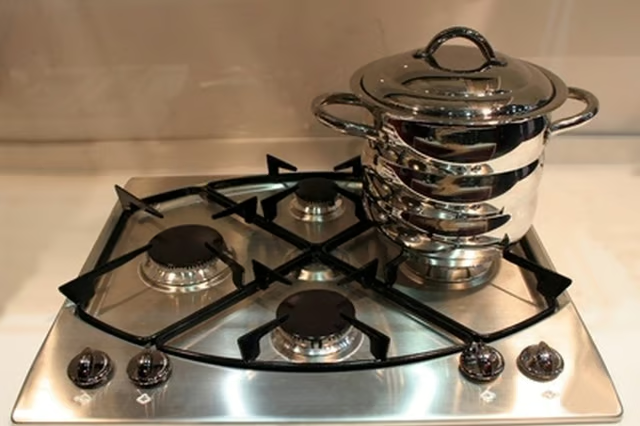
Gas Stovetop
No doubt about it, when you look at what professional chefs use inside of restaurants, the gas stovetop is the cook top of choice. Professional chefs rely on speed and dependability to serve foods to restaurant patrons. Additionally, gas stovetops are precise and provide cooks with a greater degree of control in how much heat is applied to the undersurface of pots, pans and cookware. The flame of a gas range also heats more evenly. Overall, when it comes to cooking on the stovetop, gas stoves heat up faster than electric stovetops.
Gas Oven
While a gas stovetop is definitely a faster way to obtain the right heat for cooking, in comparison to an electric stovetop, the situation changes when it comes to the speed of cooking with a gas oven. A gas oven can be temperamental and require more attention when using the oven to prepare foods. The heat is not always constant, which can cause the oven temperature to fluctuate, because the oven is vented. As a result, a cook has to turn the temperature up and down, monitor the food or rotate a pan to make sure the food is cooking evenly.
Electric Stovetop
Electric stovetops operate with coil burners, which have to heat in a sequential fashion to make the entire burner provide heat. They make start heating quicker, but it takes longer for the entire heating coil to get hot. Consequently, this process makes an electric stovetop slower in terms of producing heat for cooking, and makes the cooking process slower. Another factor that can slow down cooking time is the type of coils. Flat coils heat faster than curved or rounded coils. Flat coils also heat faster than the coils on newer glass and ceramic electric stovetops because the heating element is underneath, which in turn slows down the heating process. If you are set on ceramic, halogen coils will heat faster than radiant. Another distinction in comparison to gas stovetops is the basic reliance on electricity. If you're in the middle of cooking a meal and the power suddenly goes out, so will the stovetop and your ability to complete your meal preparation.
Electric Oven
In terms of speed and overall heating consistency when using the oven, the electric oven wins out over gas. In fact, many professional kitchens use dual-fuel ranges just for this reason. These ranges have gas burners on the stovetop, and the oven works by electricity. However, having the dual capabilities comes with a price tag that can start at over $1,500. An electric convection oven is also a faster, cleaner option in comparison to gas.
Things to Consider
If you have a stovetop need for speed, a gas stovetop will give be your best choice. If you bake frequently and use the oven more than the stovetop, an electric range may be a better choice. If money is no object, go like the pros and explore getting a dual-fuel range with a gas stovetop and an electric oven.