


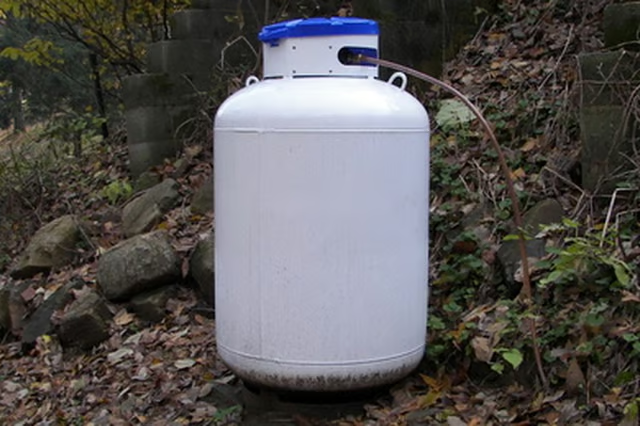
Propane generators are often used in camping and in conjunction with recreational vehicles. Some propane generators are small and portable, while others are large and permanent. Propane is typically less expensive than gasoline, which can make it a more attractive alternative. Always check for leaky valves before starting, as this could be a safety hazard.
-
Read the manual and check the equipment. Most problems with generators occur from improper use. Read the owner's manual carefully and ensure that the generator has been set up correctly. Make sure the tank is full. An empty tank is a somewhat obvious but still often overlooked first step. Check to make sure there are no leaks in the tank. Always turn off the generator before attempting any troubleshooting.
-
Check the temperature of the generator; if it's too high, it will cease to function. This is a safety feature. If the generator runs then shuts off it may be a temperature issue. Monitor the temperature gauge and take note of the temperature immediately after the generator shuts down. Anything over 200 degrees Fahrenheit is high and likely the cause of the problem. Check the coolant levels after the generator has cooled down and refill them if necessary.
-
Check the oil level and air filter. Change the oil if it is has not been changed in several months. Check the air intake vent. Make sure that it does not have any obstructions. Occasionally, especially if the generator is housed outside, leaves, dirt and other debris may become logged in the air vent. Remove any obstructions.
-
Examine the device connected to the generator. Is the device drawing too much power for the generator to handle? If the generator is rated at 500 watts and the device is 1,000 watts, this could put an unnecessary load on the generator resulting in a short or blown fuse. If the fuse is blown then replace it. Open the generator (ensure it is off) and check to make sure the electrical connections are intact. Sometimes jostling from moving the generator can knock loose connections. If this has occurred, fix the connections.
The Drip Cap
- Propane generators can be fitted with the same propane tanks as a home barbecue.
- The propane is used in place of gasoline, which is what most generators use.
- Check to make sure there are no leaks in the tank.
- If the generator runs then shuts off it may be a temperature issue.
- Check the oil level and air filter.
- Examine the device connected to the generator.
- Open the generator (ensure it is off) and check to make sure the electrical connections are intact.