


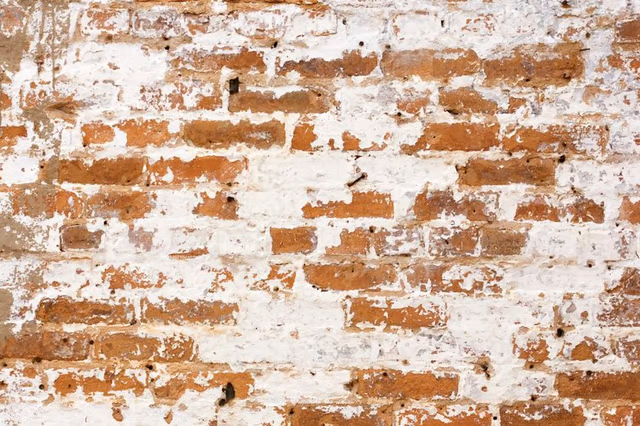
Even if the wall is in excellent condition, you may want to create a different look for the space, updating it with a modern feel. Whatever your reason, you can cover old brick walls with paint, siding or stucco.
Painting is the easiest method but still will show a "brick" wall, just altering the color. Stucco is more complicated but will create a new look entirely and not affect the structure of the bricks. Siding is another option that takes the most work. The brick wall needs to be in good condition because you will be placing nails in the structure.
Things You Will Need
-
Clean the brick wall with a power washer or a scrub brush. Use a mild detergent mixed with water to clean the brick. Allow this to dry before painting, applying stucco or siding.
-
Repair any cracks in the brick with Spackle or caulking. You want the integrity of the wall to remain in tact as much as possible.
-
Apply the new wall covering. For paint, apply a primer first and allow this to dry. Use a roll brush to cover the bulk of the wall, and then use a smaller standard brush to fill in mortar grooves or cracks. After the primer has dried according to manufacturer's instructions, apply one coat of paint on the wall. Give the wall 24 hours to dry, and then apply a second coat.
-
For stucco, mix the package according to manufacturer's instructions. Use the trowel to apply the stucco to the wall in an even manner. The first coat should be thin, using a plasterer's rake to scratch the stucco. Keep it moist for 36 hours, and then give the wall a final coat. Cover the entire wall, and allow the stucco to cure. You can paint over this the same as you would paint over the brick.
-
For siding installation, drill holes and insert concrete nails every 16 inches or as recommended by the siding manufacturer. Install the support strips for the siding along these nails using a concrete adhesive to secure it to the wall. Allow the adhesive 24 hours to dry, and then lay the siding along the support strips.
The Drip Cap
- Old homes may have walls that are made of brick.
- The brick wall needs to be in good condition because you will be placing nails in the structure.
- Use a roll brush to cover the bulk of the wall, and then use a smaller standard brush to fill in mortar grooves or cracks.
- Give the wall 24 hours to dry, and then apply a second coat.
- The first coat should be thin, using a plasterer's rake to scratch the stucco.