
Pipes
In a central heating system, the pipes run in a loop between the boiler in the building to the radiator in the room. The radiator is usually situated above the pipe, and as the water in the boiler heats up, the heat rises up through the radiator and pushes the cooler water within the radiator back into the pipe, where it can be reheated. Radiators can have a variety of pipe configurations, but single- and double-pipe loops are the most basic.
Valve
The valve is the knob that regulates the amount of heat that a radiator emits by controlling the flow of hot water or steam from the pipe into the radiator. It is usually attached to an elbow-shaped joint protruding from the floor or wall, where the radiator connects to the pipe.
Fins
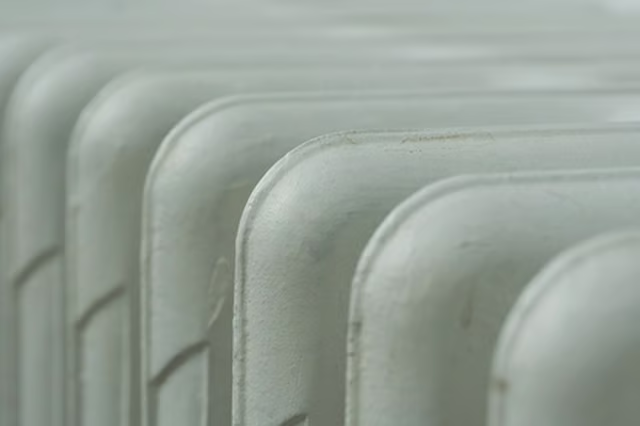
The distinctive shape of a radiator is characterized by rectangular, rib-like fins that flare out from the central tubes. The purpose of these fins is to increase surface area, making the heat transference more effective.
Coolant
In automobiles, the coolant is the liquid that runs through a car's engine block to absorb the heat caused by the mechanical friction and prevent it from overheating. Usually made from water, antifreeze or oil, the coolant is pumped through the chambers of the engine block, absorbing heat, and then through a hose to the radiator, where the heat is released into the air, sometimes with the help of a fan.
Tubes
In cars, fluid coolants are conducted through multiple flat tubes arranged in parallel formation from which heat is conducted to the radiator. These tubes make up the radiator's core. Tubes are often coated on the inside and outside and are most often made from aluminum, but they can also be copper or brass. Sometimes a type of fin called a turbulator is installed inside the tube to quicken heat extraction by increasing the internal surface area of the tube.