


Step 1
Choose wood that is dry to begin with if possible. Ash and beech are among the trees with the lowest moisture content, while hemlock and aspen are among the wettest woods. See Resources below for a table of information on varieties of firewood.
Step 2
Split wood immediately. Smaller pieces will dry faster, but be careful not to chop wood into pieces that are too small to be practical for use in your fireplace.
Step 3
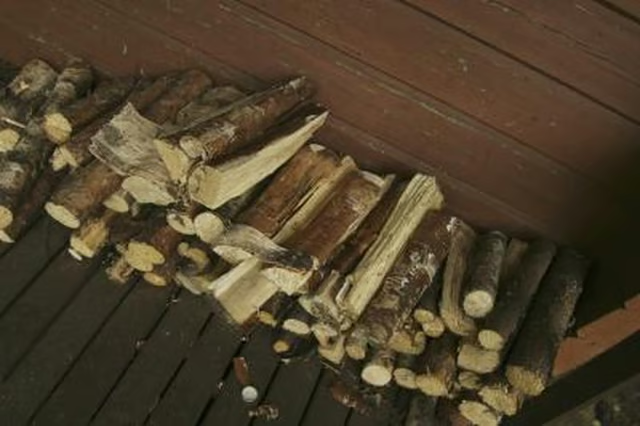
Stack wood in a place where it will be exposed to a maximum of sun and wind. Stack wood loosely, alternating directions instead of using a traditional tightly packed cord structure, to allow air to flow through the stack more easily.
Step 4
Set sturdy garden stakes, fence posts or any similar size pole at intervals of about two to three feet around the stacked firewood. If it is convenient to stack wood along a fence, use the fence in place of the stakes on that side.
Step 5
Lay plastic sheeting over the firewood and the posts. Make sure that the wood is covered entirely and the plastic sheeting hangs about a foot off the ground. Your goal is to ensure that the wood is protected from rain while allowing air to flow through. It is OK for the sheeting to touch the wood, but it should not enclose it tightly. This setup will also speed up drying by creating a greenhouse effect under the sheeting; the wood will dry faster as the enclosed area is warmed by the sun.
Step 6
Attach weights to the edges of the sheeting every four feet or so by wrapping each weight in a section of sheeting and tying fishing line or cord around it. If you have old shower curtains available, you can substitute them for the plastic sheeting and use the grommets to hang weights from instead.
Step 7
Check the wood pile periodically to ensure that the plastic covering and weights are still in place.
Step 8
Wait at least two months, if possible, before burning any of the firewood. While this method will speed up the drying of firewood quite a bit, it still takes some time. Climate makes a difference, too; it will take much longer to season wood in a cool, wet climate than a warm, dry one.