
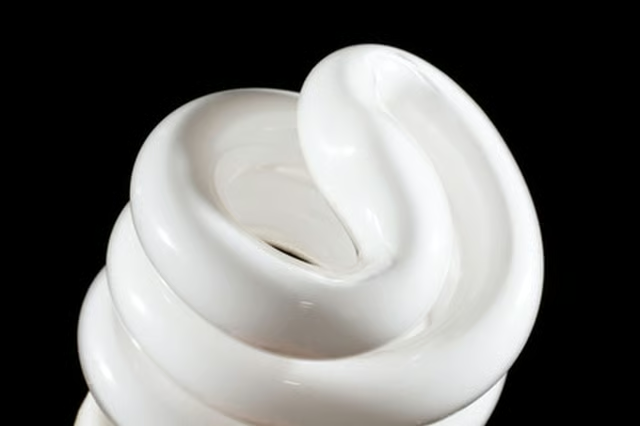


Compact fluorescent lights, also known as CFLs, are a modern type of light bulb that uses a different process to create light than the traditional incandescent lights. These lights save much more energy, and are designed to be used in the place of similar-sized incandescent lights. The ballasts, or electrical control units of CFLs, are available in several different versions depending on the type of light.
CFLs
Compact fluorescent lights work by energizing a gas trapped within the bulb using a pulsing arc of electricity. The energized gas in turn energizes a phosphorescent coating on the inside of the bulb, which produces the visible light. The ballast works to control incoming electrical current, making sure it is always of the proper voltage and cycles at the right speed to effectively light the fluorescent bulb.
Self-Ballasted
Self-ballasted CFL bulbs have dedicated ballasts that are part of the bulb base itself. This allows these bulbs to be used in some sockets that were originally meant for incandescent bulbs, so that homeowners do not immediately have to switch over to fluorescent fixtures (unless required to by government regulation). The ballast intercepts the electrical current before it enters the bulb itself, and it cannot be removed from the base.
Unballasted or Dedicated
CFL bulbs that are unballasted, non-ballasted or dedicated are only bulbs and do not have a ballast that manages the flow of electricity. They can only be used with a fluorescent socket that is equipped with its own ballast to manage the current before it reaches the bulb at all. These bulbs may also be called "pin-based" because of the pins they use to connect into fluorescent bases.
Modular
Modular CFL bulbs are designed to be used with both types of sockets, those with a ballast and those without. One end of the CFL bulb is equipped with a ballast, while the other end has pins designed to fit into a system that already has a ballast of its own. Some modular bulbs simply have a ballast that can be removed and replaced as needed.
Light Bulb Quality
Whether the bulb has a light or not does not affect the quality of the light itself. Both versions have similar life spans. The primary difference is that non-ballasted CFLs will be less expensive, but if the ballast in a socket malfunctions, the entire socket will need to be replaced.