-
Remove all props and scenery from the stage to prepare it for painting. Place heavy-duty canvas or vinyl tarp over any objects which cannot be displaced, like building projects that in progress or stationary backgrounds.
-
Sweep, mop and thoroughly dry the stage floor before beginning to apply any paint. You will want to make sure that the surface is completely free of dust and debris.
-
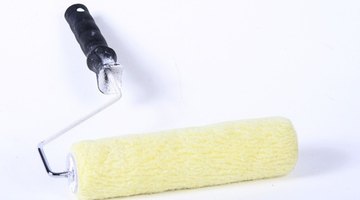
Fill your shallow paint pan with as much black latex paint as it will contain, and roll your paint roller in the substance until it is soaked through with a generous amount.
-
Start going over the stage in long strokes, walking backward to avoid stepping in the fresh paint. Apply a thick coat to the stage floor, making sure to smooth out bubbles and bumps as you go along. You'll want the surface of the stage to remain as smooth and flat as possible.
-
Cover the entire stage with the paint, using as many buckets as required by the size of your floor. Make sure that the coating is thick enough to be bold, but not so thick as to chip easily. When the whole stage is covered, let it dry before going over edges and corners with your brush, paying special attention to each nook and cranny.
-
Dispose of your paint by letting it dry out completely and harden in a well-ventilated space before throwing it into the garbage. Allow the stage floor to dry before any actors or builders tread on its surface. Give it a couple of days before any performances are staged atop the layers of black paint.