


Refrigerator and Freezer Energy Costs
Because it must run almost constantly to maintain a cool environment, a refrigerator and freezer unit, or a standalone freezer, requires a lot of electricity to operate. According to Sempra Energy, a refrigerator-freezer combo can add up to 20 percent of the annual electricity costs in a home, while a standalone freezer can account for around 15 percent. So, if you have both a refrigerator-freezer and a standalone freezer operating in your home, they can add up to more than one-third of your total electric bill.
Full Freezer
When you place items in a freezer, as they become frozen, they act to help keep the freezer cool, in much the same way that ice keeps the interior of a cooler cool. When full, the freezer does not need to run as frequently to maintain the same temperature, so keeping a stocked freezer helps with efficiency. Avoid adding a large amount of food that’s not frozen to the freezer at one time, though. Sempra Energy recommends adding 2 to 3 pounds of unfrozen food every 24 hours.
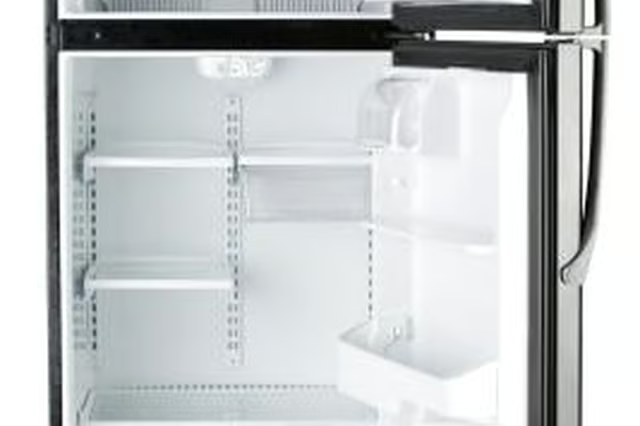
Empty Freezer
When a freezer sits empty, the only thing that keeps it at the proper temperature is the electricity, so it requires more electricity to maintain that temperature. If you do not have a full freezer, Planet Green suggests filling in the voids around the food with jugs or reusable containers filled with water. When the water freezes, the containers become ice blocks that help cool the freezer, decreasing the amount of electricity it needs to operate.
Is More Better?
Although a full freezer runs more efficiently than an empty freezer, overfilling a freezer does not provide the ultimate in savings. Instead, an overfull freezer decreases efficiency because of the inability of the sensor to read the temperature properly. If you have the paperwork for your freezer, consult it for the maximum capacity for the appliance. If you don’t have the paperwork, just don’t force in items where there doesn’t seem to be enough space and avoid covering the sensor, which generally is found in the back of the unit toward the top.