
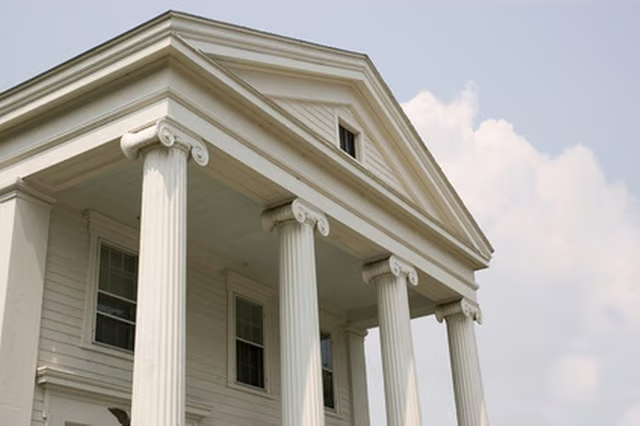
Pediments are typically considered a feature of classical architecture.
Pediment or Portico?

A portico is another common architectural feature that is sometimes confused with a pediment. A portico is a covered entry-like a porch that juts out from the building and is supported by columns. The portico is considered to be pedimented if it contains a pediment on its gabled roof. Porticos may be square, rectangular and even circular. One of the most famous examples of a portico is the front entrance of the White House in Washington, D.C.
History
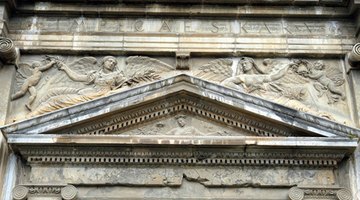
Pediments, used by early Greek architects, are associated with an architectural style known as Greek Temple. Pediments originally were used on temples honoring the Greek gods to symbolize the power of the gods over the people. Pediments also were used by the Romans and later by monarchs and the Catholic Church. Associated with divine providence, the form became popular in the United States during the Greek Revival period when Thomas Jefferson favored that style.
Examples
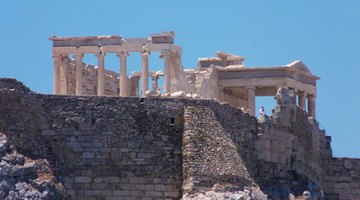
The Greek Parthenon and Pandroseion on the Acropolis are among the earliest and best-known examples of pediments. In the United States, the pediment and the associated columns and half-columns, known as pilasters, are often seen on government buildings, churches and courthouses. One of the most famous pediments is the Apotheosis of Democracy located on the east entrance of the White House, which features an array of symbolic sculptures carved inside the pediment.
Variations
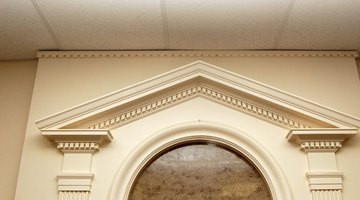
One of the most common variations on the pediment is called a broken pediment, or an open pediment, in which the peak of the triangle is left open. A small pediment located over a window or a minor entrance door is often referred to as frontal. The use and design of pediments vary by architectural style.
Styles
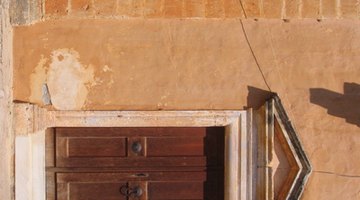
Pediments are common in Greek Revival architecture and Georgian architecture, but examples of pediments can be found in many architectural styles throughout the world. Pediments may be grand or plain, but the triangular adornment often connotes a more formal aspect to a building.