


Step 1
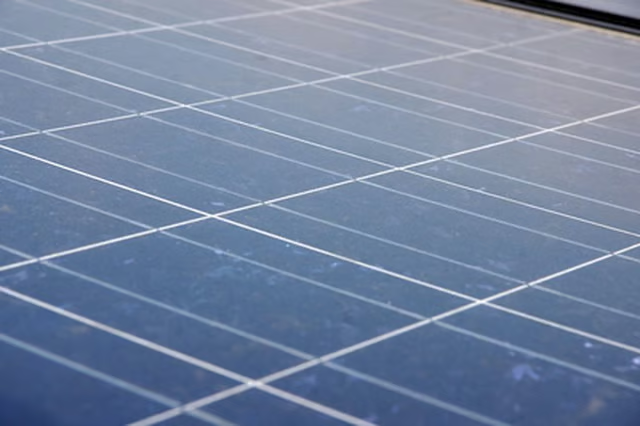
Install the solar panels. Fix the panels to your roof, or in an off-the-ground area that receives a lot of sunlight. If you are using an outdoor pump, mount your panels using a pole-mounted solar array. Make sure that your solar module is big enough to provide the needed power. Contact your pump distributor to find out how big the panel needs to be to power your pump.
Step 2
Install a power inverter. A power inverter converts the solar energy into electricity, so that it can be used to power your water pump. Solar panels convert sunlight into Direct Current (DC); however, most appliances use alternating current (AC). Once you have connected the power inverter to the solar panel, attach a storage battery. Because your water pump will probably need to run even if the panel is not producing electricity, it's important to store power when not in use. Connect the inverter to the battery using wires and an electric shunt. Make sure your battery is in a safe area where it will not get wet or be exposed to the environment.
Step 3
Connect the battery to your water pump. Run your wires from the battery and connect them to the AC connection points in the water pump. Consult the directions of your water pump to make sure your battery connection wires are correctly installed. Cover any exposed wires with waterproof tape or plastic caps. Turn on the solar panel and allow the DC current to flow into the converter. You will now be able to power your water pump with your solar panel.