


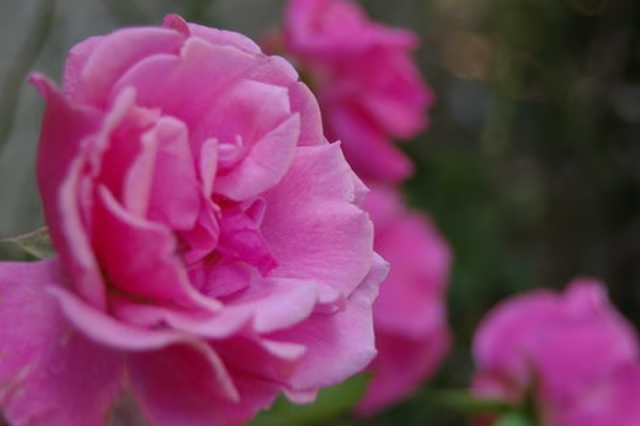
Soaps used to kill rose pests are called insecticidal soaps, and they are a nontoxic, biodegradable alternative to chemical pesticides, which often do more harm than good.
Common Rose Pest
Aphids are the most common rose pest. Different species attack roses, including the rose aphid, the potato aphid and the cotton aphid. Healthy roses and resistant varieties can withstand light aphid infestations, and aphids can easily be dislodged by hand or by a strong jet of water. Heavy infestations can secrete a lot of honeydew, which not only attracts ants--which end up protecting the aphids from their natural predators as they pirate the honeydew--but also leads to development of sooty mold, a black fungus that completely covers the foliage. Since aphids are soft-bodied insects, they are among the pests that insecticidal soaps can control.
Function
Insecticidal soaps are formulated to kill garden pests, specifically soft-bodied pests such as aphids, spider mites and thrips, pests that commonly attack roses. Insecticidal soaps wash away the cuticle--an insect’s protective coating--allowing the fatty acids in the soap to penetrate the insect’s exterior, causing cell death.
Benefits
Unlike chemical-based insecticides, insecticidal soap, when used as directed by the product, poses few risks to neighboring plants, the environment or people and animals. It is possible, provided the right soap is used, to make homemade insecticidal soaps, which also saves money.
Risks
Insecticidal soaps can harm aquatic life and should be used with caution near waterways. They are also capable of harming beneficial insects such as pollinators, but especially the ladybug larvae that love to feed on aphids.
Considerations
In order to be effective, insecticidal soaps must make contact with the insect and must cover the top and bottom of the leaves as well as the affected buds. Roses should be sprayed in the morning so the soap will dry completely. If the soap does not evaporate quickly enough, there is a risk of the soap burning the leaves. This is called phytotoxicity. Hard water is not effective with insecticidal soaps, which must be used with soft or distilled water.