


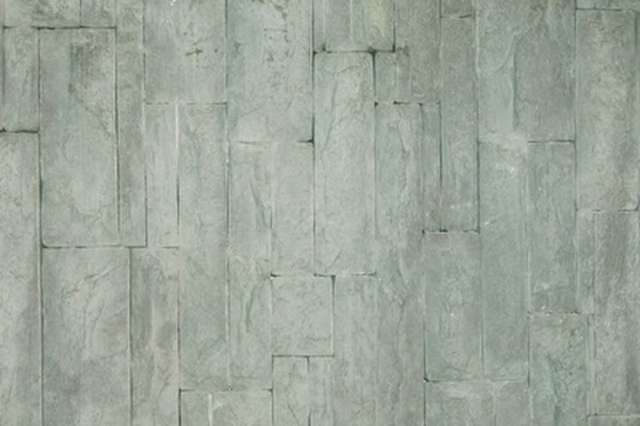
To achieve this look long term, use sealers.
Characteristics of Slate Tiles
Slate is a metamorphic stone, comprised of shale which has undergone tremendous pressure and force to create a dense, hard material. Since shale was created in multiple layers of sediment, slate will often split or cleft along these layers as well, making the material ideal for forming into tiles. Like all natural stone, slate is porous, meaning that its surface is covered in thousands of tiny holes invisible to the naked eye. These holes allow the material to absorb moisture. When wet, slate tiles will deepen and darken in color. This can give the tiles a richer appearance, also helping to alleviate some of the chalky consistency that slate will sometimes have due to its cleft and layered nature.
Sealing and Enhancing Slate Tiles
All slate tiles should be sealed during installation with an impregnating sealer to help protect the stone and help make clean up of grout easier. A second, topical sealer can also be applied to the stone after it has been grouted to enhance and deepen the color.
There are two types of enhancing sealers. Matte finish sealers will deepen and enhance the color of the stone, but will leave the stone with a flat, matte look. This is ideal if you like the deep color of the slate when wet, but don't necessarily like the shiny, wet look.
Shine enhancing sealers will deepen and enhance the color of the stone like the matte finish enhancers, but will also leave behind a glossy finish. This glossy finish should be carefully applied to natural cleft slate tiles, since it can pool and build up in some areas, creating a varnished look. If applied carefully, to give just a thin layer of topical sealer to the entire stone, the tiles will appear to be wet even after the sealer has completely dried.
Both types of topical sealer should be reapplied on an ongoing basis to help protect the stone and keep its deep color. Well sealed tiles should bead water up off of their surface when they get wet; when the water stops beading up, it is time to re-seal the stone.
The Drip Cap
- Slate tiles have a multi-colored variegation that is beautiful and unique to each lot of stone.
- Even a single color of slate tile will vary from piece to piece in shade and tone.
- Since shale was created in multiple layers of sediment, slate will often split or cleft along these layers as well, making the material ideal for forming into tiles.
- These holes allow the material to absorb moisture.
- This glossy finish should be carefully applied to natural cleft slate tiles, since it can pool and build up in some areas, creating a varnished look.