


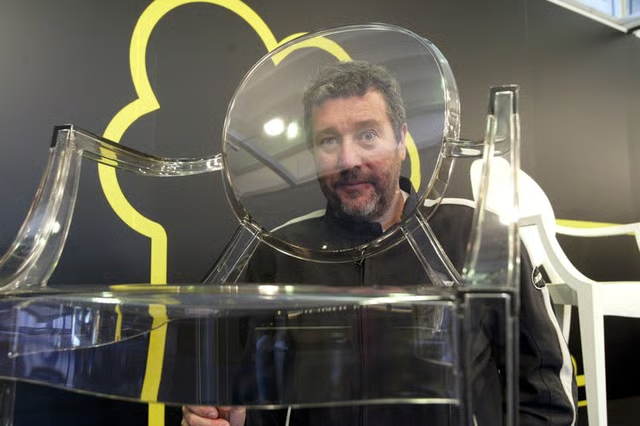
While very strong and harder to shatter than glass, Lucite tends to scratch quite easily and requires a little extra attention to remove scratches.
Things You Will Need
-
Blow off any dirt that might be on the surface of the Lucite before cleaning to avoid adding more scratches. If there is a lot of dirt or grit, run the Lucite under warm running water to aid in the removal.
-
Apply a mild, non-abrasive plastic polish.
-
Clean small areas with a non-abrasive soft cloth before moving on to the next area. Attempting to clean large areas all at once could create more scratches.
-
Rinse the Lucite with warm water, then dab dry by gently blotting the surface with a clean, non-abrasive cloth. Do not rub to avoid adding more scratches.
-
Use a power buffer with a clean cotton bonnet and a plastic polish that is slightly abrasive and made specifically for removing scratches in plastic. Follow all directions included with the product to avoid making the scratches worse or creating new ones.
The Drip Cap
- Lucite is a commonly used trade name for PMMA (polymethyl methacrylate), which is a synthetic polymer of methyl methacrylate.
- Blow off any dirt that might be on the surface of the Lucite before cleaning to avoid adding more scratches.