


History
Man has known of ammonia since antiquity—the Roman author Pliny may have referred to it. A form of liquid ammonia made from fermented urine was used for dyeing clothing in the Middle Ages. By 1897, Sears, Roebuck & Co. listed ammonia in their catalog of household items. In the early 20th century, German chemists synthesized ammonia from nitrogen in the air and used it to make explosives. Ammonia was also used as a refrigerant before the introduction of Freon and other chloroflourocarbons. Ammonia is a major component of most fertilizers today.
Properties
Household ammonia is an aqueous nitrogen-based solution. It consists of five to 10 percent ammonium hydroxide (NH3) in water, often with added detergents. It may also have added clarifying agents. It is a caustic liquid that gives off a pungent vapor.
Cleaning
Household ammonia can be diluted with water to make a streak-free window cleaner. It is also used to make cleaning solutions for floors, walls, shower stalls, counters, stovetops and appliances. Mildew, scuff marks, tarnish and some stubborn clothing and carpet stains can be removed with ammonia.
Repellent
Lacing your garbage cans or gardens with ammonia will keep dogs and raccoons from rooting around where you'd rather they didn't. An ammonia treatment will also banish moths from your clothing drawers and closets.
Precautions
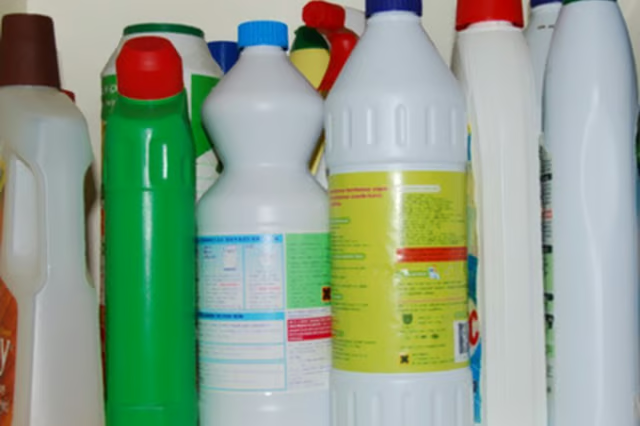
Do not allow household ammonia to come in contact with your eyes or in prolonged contact with your skin. Avoid breathing ammonia vapors and always use the product in a well ventilated area. Household ammonia is a caustic that can damage rubber and some plastics. Never mix ammonia and bleach—it unleashes toxic chlorine gas. For that reason, be careful not to allow household ammonia to mingle with bleach-based toilet and tile cleaners.
The Drip Cap
- Household ammonia is a versatile product that helps in tackling many tasks around the home.
- In the early 20th century, German chemists synthesized ammonia from nitrogen in the air and used it to make explosives.
- It consists of five to 10 percent ammonium hydroxide (NH3) in water, often with added detergents.
- An ammonia treatment will also banish moths from your clothing drawers and closets.
- Household ammonia is a caustic that can damage rubber and some plastics.