


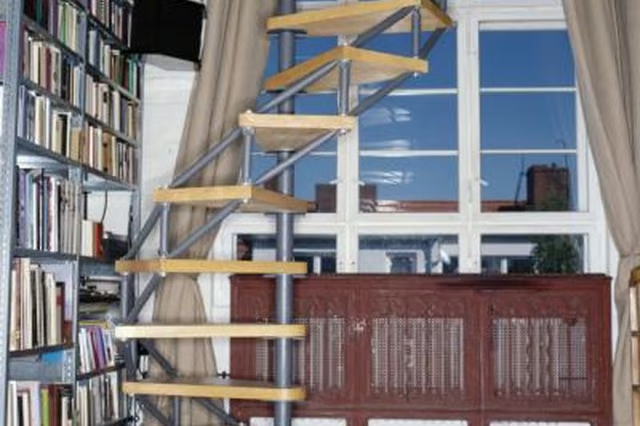
Space
Perhaps the primary advantage spiral staircases have over regular stairs is their space-saving capabilities. For example, a straight staircase that is 18 feet high and 3 feet wide fills 105 square feet of space, while a spiral staircase of the same proportions fills only 45 square feet of space. The smaller amount of space required by spiral stairs also means they rarely dominate a room, which sometimes happens with straight and L-shaped stairs.
Limitations
Spiral staircases have more limited uses than other types of stairs. You cannot use them as the sole means of access to an full upper story, because building codes prevent such construction. You also cannot move most large pieces of furniture up and down the typical spiral staircase. They don't work well as the sole means of entry to a basement, because you might need to take large appliances, such as a furnace, down the stairs.
Indoor and Outdoor
Many people like the look of spiral stairs and feel they give an air of romance to a room or space. When built indoors, they create a good means of providing entry to lofts. Spiral stairs often work well in outdoor settings, such as fire escapes, and to give access to areas such as widow's walks. They have a long history of indoor and outdoor use in commercial applications, such as accessing catwalks and skywalks.
User
A spiral stair case has both advantages and disadvantages for the user. Spiral stairs that center around a vertical pole typically have a railing only on the side opposite the pole. Users can easily miss a step if they walk on the side without a rail, especially when going downstairs. However, if a user falls on a spiral staircase, he is much less likely to fall all the way down the to the floor, as he might on a straight staircase, because the curve of the stairs will break his fall.