


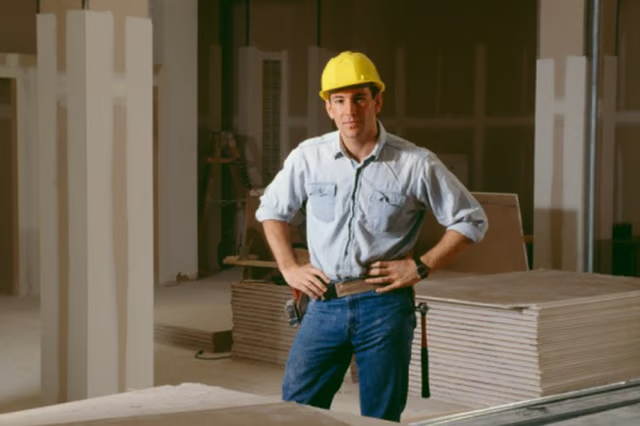
They are both designed to be solid and durable, but hardboard and plasterboard are manufactured using different processes and materials, making them ideal for separate situations.
Manufacturing
Hardboard, also called Masonite, is manufactured from wood fibers taken from wood chips and waste. The wood fibers are pressed together in a process using heat and steam. Glues are used to hold the material together, and each board is covered with a hard veneer surface. Plasterboard, also called gypsum or drywall, is made of a layer of gypsum pressed between two layers of paper. It is specially designed for use with plaster.
Types
Hardboard types include standard, medium and oil tempered. Oil-tempered boards are harder than standard or medium hardboard, making them more resistant to moisture and scratching. Medium is stronger and more scratch resistant than standard hardboard, making it more suitable for building furniture and cupboards. Specialty hardboards can be ordered with embossed, perforated or veneered surfaces as well.
Plasterboard is treated with additives to give it certain properties. These additives vary the strength and weight of the plasterboard. Fire-resistant boards, for example, are ideal for multi-family dwellings, such as as apartment, where building codes require fire-retardant materials. Moisture-resistant plasterboard is intended for use in bathrooms and basements where the air is humid and the boards are constantly subjected to moisture. These boards are specially treated to resist water. Standard plasterboard does not have these properties and is used on interior walls and ceilings where moisture is not an issue.
Uses
Plasterboard can be used in a variety of conditions depending on the grade or type of board you buy. Moisture-resistant plasterboard is ideal as a backing for tile in bathrooms and kitchens. Standard plasterboard is not ideal for consistently damp conditions. Plasterboard is used as a covering for walls indoors and has good sound blocking properties. Some types of plasterboard have a specially designed core that is used in applications where soundproofing is needed.
Hardboard can be used for interior walls and ceilings and is also ideal for use as subfloors and in many types of doors. Hardboard is fairly easy to cut, making it ideal for making cupboards and furniture as well. It is often used for store shelving and displays and for automotive trips and linings.
Disadvantages
Hardboard is not good for outdoor applications or in areas where it may be subjected to a large amount of moisture because it absorbs water and swells. Plasterboard is more prone to cracking when handling than hardboard but, once properly installed, it provides a strong, hard surface. Like hardboard, plasterboard is not suitable for most exterior applications.