-
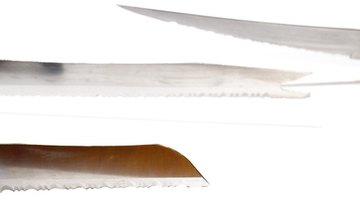
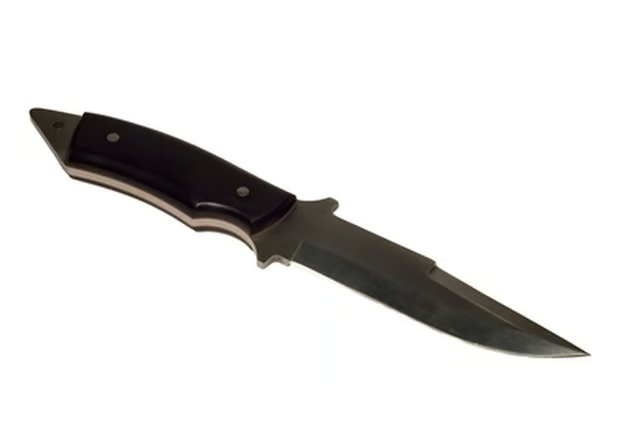
Wrap the blade of the knife in a paper towel and wrap gray tape around the knife blade. Remove any of the remaining wood from the knife's old handle. Use wire cutters and cut the old rivets as close to the knife blade as possible. Repeat this process on the other side of the knife handle. Use a metal punch to push the remaining pieces of the rivet from the holes. Clean all dirt, rust, and grime from the metal part of the blade, or tang. Use a fine grit sandpaper to buff away any stubborn rust spots.
-
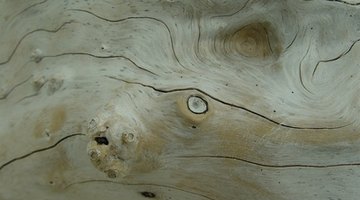
Lay the tang on the wood and mark the rivet holes on the wood. Move the tang off the wood. Using a wood drill with a bit that matches the size of the rivet hole, drill a hole through the wood slab. Carefully saw the chunk of wood evenly in half long ways. Using the epoxy, glue the wood slabs on each side of the tang, matching the rivet holes in the wood up with the rivet holes in the tang.
-
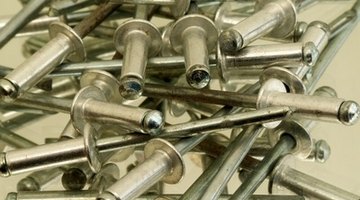
Insert the male end of the compression rivet through one side of the hole and insert the female side of the rivet through the other side of the hole. Place the knife handle on a padded surface and with a rubber mallet hit the rivet forcing the two pieces together, this compresses the rivet and causes them to lock. Repeat this step with the second hole.
-
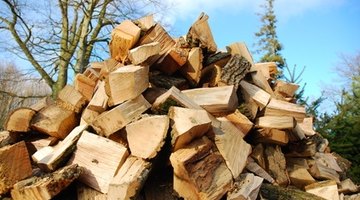
Sketch the shape of the knife handle onto the wood chunk. Using a sharp blade whittle away the wood block until it is the desired shape. Use varying grits of sandpaper to smooth out the new handle.