


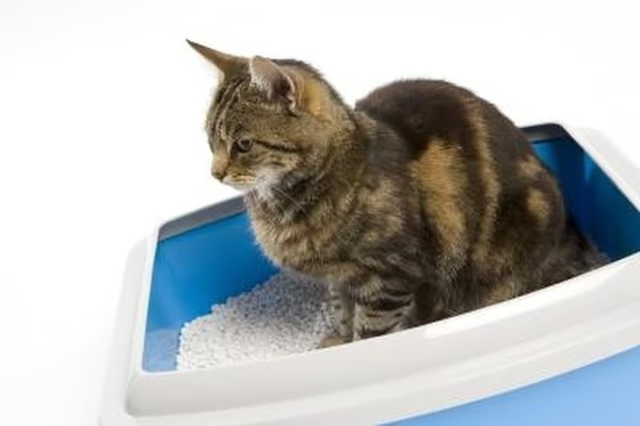
How Cat Litter Works
Historically, cat litter was made from sand, dirt and even the ashes from old furnaces, according to the ASPCA. Today's cat litters are designed to absorb urine (and feces moisture) to reduce odor. When the cat urinates on the litter, the clay granules go to work absorbing the liquid. Some litters have clumping agents (bentonite clay), which cause the urine and clay to stay together, forming a large, scoopable clump, while nonclumping litters simply absorb the urine without forming any clumps. Kitty litter granules are able to absorb their weight in liquid.
Reasons for Litter in a Drain
The most common reason for litter to enter a drain is because it was purposely poured there by the owner, particularly into toilets. However, cat litter can also get into sink drains and bathtub drains, either intentionally by the owner from simply rinsing out the litter box or perhaps by a younger child or even over time from a cat's paws. While some manufacturers claim their litter is flushable, many plumbers recommend never to flush any litter, regardless of manufacturer claims.
How to Unclog a Litter-Clogged Drain
With clumping cat litter, it may be possible to unlodge the clump using a plunger. This can be tried prior to calling a professional or trying additional at-home remedies. Chemical drain openers may be beneficial, but in most cases, it may be necessary to use a metal hanger, a plumber's snake or a sink auger to break up the litter clump. If none of these methods are successful, a professional will be needed to remove the kitty-litter clump.
Potential Damage to Litter-Clogged Drains
Repeated attempts to unclog a litter-clogged drain by a nonprofessional may result in damage to the plumbing system in the home. Chemical products can damage the pipes if too much product is placed into the system at one time. This is especially true in newer homes, where the pipes may be made from PVC. Repeated pressure from attempting to plunge out the clump can result in damage, such as a small leak.