
Things You Will Need
-
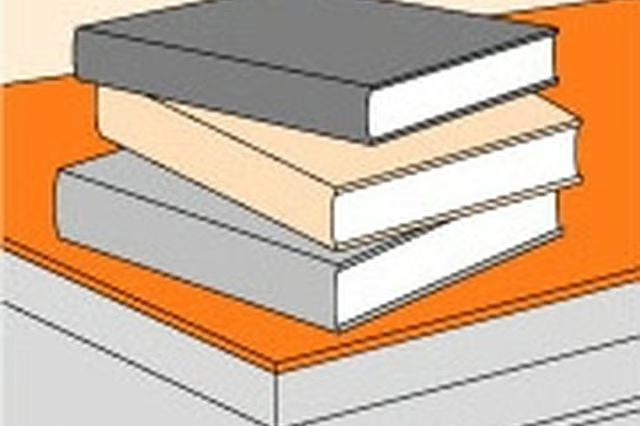
For small areas of bubbling, reactivate the adhesive by heating the laminate. Use a hair dryer or an iron on low heat, taking care not to scorch the surface. Weigh down the repair area with heavy books or cans (see illustrations).
-
For large areas of peeling, use a small knife to scrape away old adhesive from the support surface and the back of the laminate.
-
Heat the edging gently, if needed, and press it back into shape.
-
Spread contact cement on both the support surface and the underside of the laminate. Use toothpicks or wood strips to prop up the laminate until the adhesive is almost dry.
-
Press the laminate down firmly, easing out air pockets with a rolling pin. Weight the surface evenly with heavy objects. Use masking tape to hold the edging in place.
-
Let the countertop dry for 24 hours.
-
For minor gouges and chips, buy laminate repair paste to match the color of your counter. If needed, blend several colors.
-
Clean the damaged area with rubbing alcohol.
-
Fill the chips with the laminate paste. Smooth it flat with a putty knife. Let it dry completely, leaving it undisturbed for 24 hours.
-
Remove stains with distilled vinegar, rubbing alcohol or bleach. For minor scratches, polish the counter with lemon oil or car wax.
The Drip Cap
- With time, your countertops will show the effects of water, heat, and daily wear and tear.
- For more serious damage, it's best to replace the countertops entirely.
- For large areas of peeling, use a small knife to scrape away old adhesive from the support surface and the back of the laminate.
- Use toothpicks or wood strips to prop up the laminate until the adhesive is almost dry.
- Clean the damaged area with rubbing alcohol.