


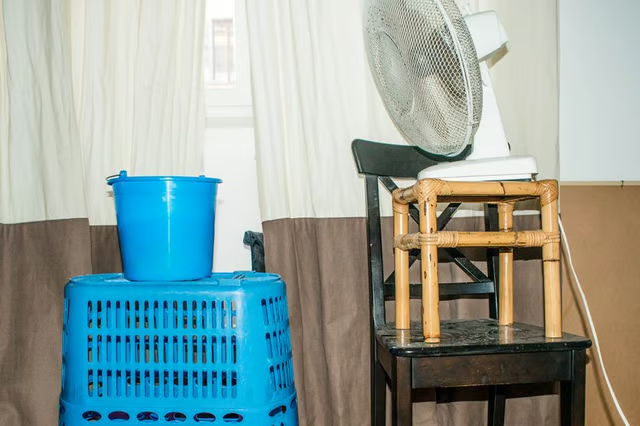
Things You Will Need
-
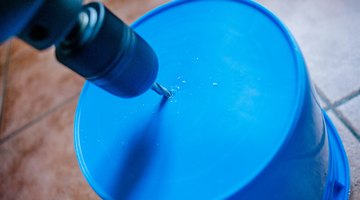
Drill a hole in the bottom of a medium sized plastic bucket with an electrical drill. The hole should be at least quarter inch in diameter. (Alternatively, you can bore the hole using a screwdriver or other sharp pointed object.) Be sure to wear safety goggles and loves when working with sharp tools.
-
Place a piece of chicken wire or mesh at the bottom of the bucket to cover the hole. Size to fit by placing the mesh underneath the base of the bucket and tracing the perimeter onto the mesh using a marker pen. Use tin snips or wire cutters to cut the mesh.
-
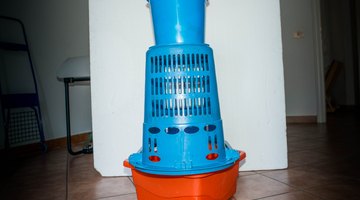
Fill the bucket with rock salt (the kind used to melt ice) and place on a stand. The stand should be resistant to drying or corrosion from the salt and be porous enough to allow moisture to drip through. The ideal stand would be similar to a stack of plastic milk crates. The height of the stand depends on the amount of space available.
-
Place a second bucket underneath the stand to catch moisture content. This bucket does not have a hole in it and is simply a net to prevent captured moisture from seeping onto the floor.
-
Give the homemade dehumidifier a few days to get working properly. The industrial strength salt should pull water into it and then release it, letting the water drip out of the bottom of the top bucket into the bottom bucket.
-
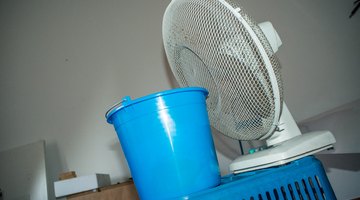
Direct moisture towards the bucket system using a box fan to increase effectiveness. This is not necessary in smaller areas, but will help collect moisture in larger rooms.
-
Check the effectiveness of the dehumidifier by testing the relative humidity inside the home using a hygrometer. Hygrometers are available at large home and garden stores. Increasing the size of the dehumidifier will increase its effectiveness.



The Drip Cap
- A dehumidifier removes moisture from the air reducing the chance of mold and mildew buildup.
- The hole should be at least quarter inch in diameter.
- ( Place a piece of chicken wire or mesh at the bottom of the bucket to cover the hole.
- Direct moisture towards the bucket system using a box fan to increase effectiveness.