


It comes in such a variety of lengths and jointing techniques that it is not often that it needs cutting to fit a job.
Things You Will Need
-
Measure for your cut first. Mark your cut point with a felt tip marker, or wrap a newspaper around the pipe at the cut point or score the point with a chisel. There are two basic clay pipe cutting tools, a power saw with a masonry blade or a chain pipe-cutting tool. It also is possible to score it with a chisel, gradually deepening the cut until the clay pipe snaps apart, but the tools are easier.
-
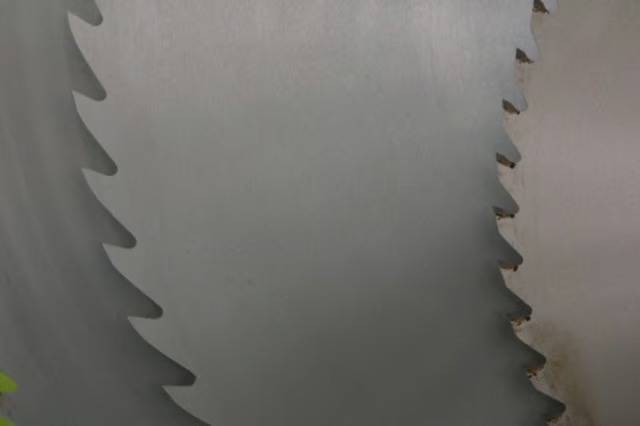
Cut pipe with a power cut-off saw with a masonry blade; some use a diamond-tipped blade. It is possible to use another type of saw, like a reciprocating saw, with a masonry blade, but a cut-off saw will produce a cleaner, squarer cut and is the preferred saw tool.
-
Cut clay pipe with a chain tool. This has a chain with hardened steel discs which wraps around the pipe. A lever tightens the chain and is used to rotate it around the clay pipe. The lever progressively tightens the chain, gradually scoring the clay until the pipe snaps apart. This requires more manual pressure and is more time-consuming, but can be used easily in situations where the pipe is in a trench or otherwise not easily accessible for a cut-off saw. It also will produce a clean, square cut.
The Drip Cap
- Clay pipe once was common in sewer lines.
- Measure for your cut first.
- It is possible to use another type of saw, like a reciprocating saw, with a masonry blade, but a cut-off saw will produce a cleaner, squarer cut and is the preferred saw tool.
- A lever tightens the chain and is used to rotate it around the clay pipe.