

-
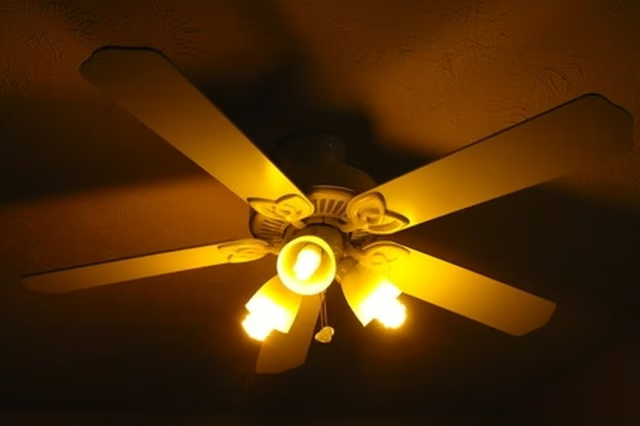
Turn off the ceiling fan and wait for the blades to stop rotating. Use a step stool if extra height is required to reach the ceiling fan blades easily without straining. Use a small Phillips screwdriver to tighten all screws on the ceiling fan blades.
-
Tighten each screw on the blade irons, which sit close to the motor on each blade, by turning the screws clockwise. Each blade iron attaches to the ceiling fan motor with two screws. Tighten the fan motor screws by turning them clockwise.
-
Replace any screws that are stripping out. A faulty screw will turn around and around, but will still be loose. Fastening a screw too tightly will strip a screw. If any of the screws in either the fan blade iron or the fan motor iron are not holding the materials tightly, replace them with new screws.
-
Attach plastic clips from a ceiling fan balancing kit to balance the blades. Home improvement stores sell kits that include plastic clips and weights. Turn off the ceiling fan and use a step stool to reach the blades. The plastic clips operate like bobby pins, opening slightly and sliding onto the ends of the blades.
-
Turn on the ceiling fan and observe to see if there is any change. If this corrects the wobbly blades, remove the fan blade clip, peel off the backing from a fan weight and stick it on the top side of the fan blade. If the first blade with a clip made no difference in the operation, remove the clip and try the next blade. Continue until you find the blade that needs adjustment.
Articles
View All Hover to load posts
Articles
View All Hover to load posts
Articles
View All Hover to load posts
Articles
View All Hover to load posts
Articles
View All Hover to load posts
Articles
View All Hover to load posts
Articles
View All Hover to load posts
Articles
View All Hover to load posts
Articles
View All Hover to load posts
