


Guitar Amplifiers
Some guitar amplifiers, known as solid-state amps, rely on semiconductors to turn the input signal from an electric guitar into an output signal suitable for performing live in a large space. The semiconductors inside a guitar amplifier convert the electric input signal in a series of stages which the user can control with dials on the device to produce music with the appropriate volume and tone. Traditionally guitar amplifiers used vacuum tubes, which made them fragile, expensive and bulky devices. Semiconductors allow musicians to use amplifiers that are much easier to transport and less costly to service and repair.
Transistor Radios
Early radios were large devices that used vacuum tubes to amplify an over-the-air signal and produce an audible sound through the device's speakers. The development of transistors, which are semiconductors that function as both an electronic switch and a signal amplifier, allowed electronics manufacturers to produce small, portable radios for the first time. Transistor radios are also notable for being among the first Japanese-produced electronic devices to sell in high volumes in the U.S.
Appliances With Integrated Circuits
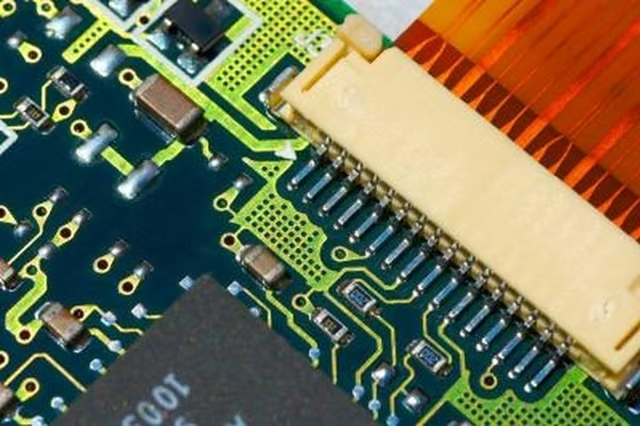
Semiconductors are an essential component of integrated circuits, including computer chips. Today many different types of devices rely on one or more computer chips to perform advanced functions. These include appliances like microwaves, digital thermostats and televisions. Other household appliances and devices that use integrated circuits include digital radios, DVD players, stereo systems, clothes washing machines and, of course, personal computers.