


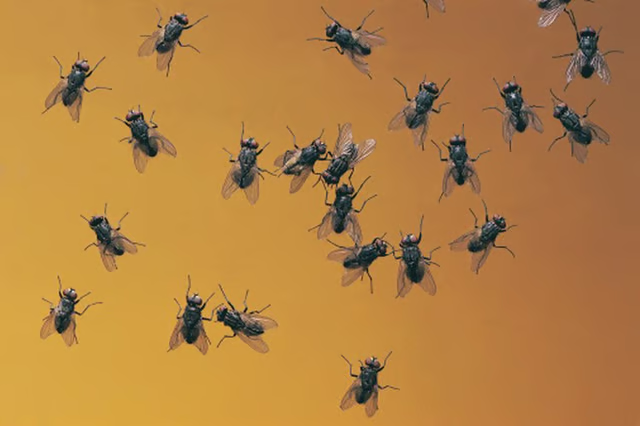
Certain species of flies are associated with disease-causing bacteria that can make humans sick.
Types
House flies are gray winged insects that have dark or yellow stripes on their thorax. House flies are usually found inside or around the home where humans are present. Adult flies reproduce by laying eggs in garbage cans, near food or in animal feces. Cluster flies are also common indoor pests. These flies are large, black or gray and are usually seen in window sills in late fall. These flies do not reproduce while living indoors and only produce three generations each year.
Effects
House flies consume both liquid and solid food, regurgitating food in order to digest it. When flies place regurgitated food on human food, it can spread bacteria and disease. House flies can reproduce during the winter months if the temperatures remain mild. When temperatures are fairly warm, house flies breed almost continually. Cluster flies gather together in warm places during daylight hours. When night falls and temperatures drop, cluster flies go into hiding. Cluster flies are sluggish during cold weather and go dormant in the winter, which means they do not reproduce when the weather is cold.
Cultural Control
Placing screens in your windows and on your doors can help keep house flies and cluster flies outdoors where they belong. Avoid keeping food out on your kitchen counters, as this also draws flies inside. Caulk and seal all openings around your home that flies can enter. Keep your garbage in a covered can and empty it frequently.
Chemical Control
Severe infestations of house flies and cluster flies may require chemical control products. Spraying your home with permethrin is often effective in reducing populations of house flies. Aerosol sprays with the active ingredient resmethrin may also help control house flies indoors. When the weather warms in the spring until late summer, house flies are abundant and active.
The Drip Cap
- House flies are common indoor pests that can become a nuisance if not controlled.
- Some flies are active and reproduce during the winter if temperatures are mild.
- Adult flies reproduce by laying eggs in garbage cans, near food or in animal feces.
- Placing screens in your windows and on your doors can help keep house flies and cluster flies outdoors where they belong.
- Keep your garbage in a covered can and empty it frequently.
- When the weather warms in the spring until late summer, house flies are abundant and active.