


Things You Will Need
Tubing connectors have opposing plugs that fit into the ends of two or more sections of tube to create a joint. Typically made from hard nylon, different aluminum connectors can accommodate straight joints as well as corner joints. The wide range of connector types include one-way through six-way connectors, hinged connectors and connectors that join tubes to caster wheels are available.
-
Cut the square tubing to the desired length. For your measurements, take into consideration the width of the solid section of the connector that exists between the plugs. Aluminum tubing can be cut with a chop saw and metal blade or with a hacksaw. Always clamp down tubing when using a chop saw.
-
Sand any sharp edges and remove any shards with a metal finishing pad or an emery cloth.
-
Hold the metal tubing tightly and push one end of a connector into the end of the tubing. Push it on as much as you can with your other hand.
-
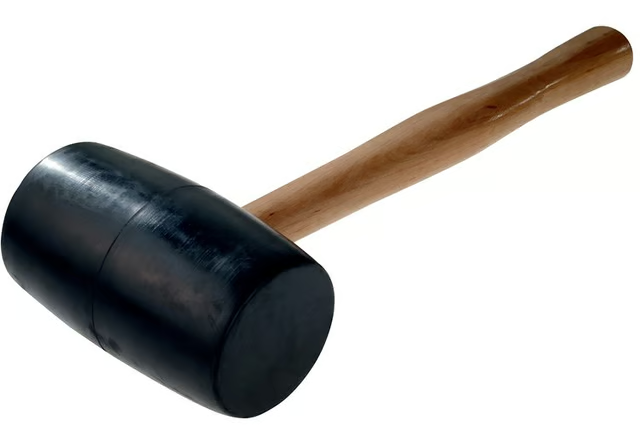
Hammer in the connector the rest of the way with a rubber mallet. Hammer until the tubing is completely inserted into the socket and you have a snug fit.
-
Push the other end of the connector onto the other section of tubing.
-
Hammer the opposite end of the aluminum tubing with a rubber mallet until it is securely fitted on the connector plug.
-
Continue to add connectors and lengths of tubing in this same manner, until you have your planned structure finished.
-
Remove and detach connectors as needed by using the mallet to back them out of the aluminum tube ends.